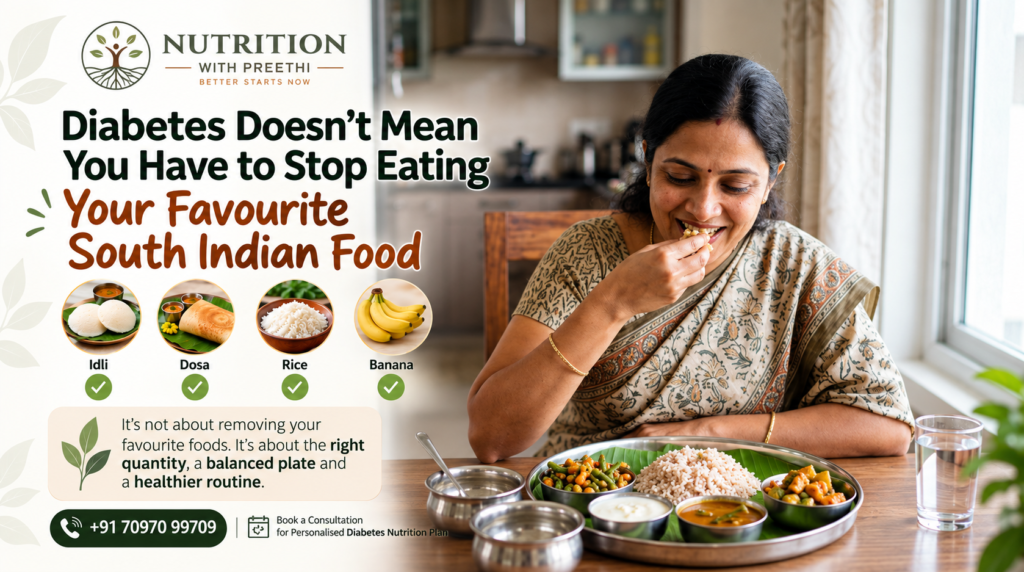
“I have diabetes. Does this mean I have to stop rice, idli, dosa, banana and mango?”
This is one of the most common questions I hear. And I understand why. In many South Indian homes, rice is not an occasional food. It is part of everyday life. Breakfast may be idli, dosa, pesarattu, upma or pongal. Lunch may revolve around rice, sambar, dal, vegetables and curd. Filter coffee may be a daily ritual. When diabetes enters the picture, suddenly familiar food can start to feel frightening.
But diabetes nutrition should not make you afraid of your kitchen. A useful South Indian diabetic diet plan should help you understand portions, meal balance, carbohydrate quality, protein, vegetables, meal timing and your own glucose response — while still respecting the foods you actually eat.
Current diabetes guidance does not support one universal “diabetic diet.” The American Diabetes Association recommends individualized meal plans that consider nutrient quality, total calories, metabolic goals, usual eating style, cultural background and food preferences. That is exactly why a South Indian approach can be both practical and clinically sensible.
| PREETHI’S TAKE “I do not begin by asking a person with diabetes to stop rice. I first look at the whole day: how much carbohydrate is being eaten, where the protein is, how many vegetables are present, what the snacks and drinks look like, meal timings, medicines, activity and glucose patterns. The goal is not food fear. The goal is a pattern you can actually live with.” |
Quick Answer: What Should a South Indian Diabetes-Friendly Meal Look Like?
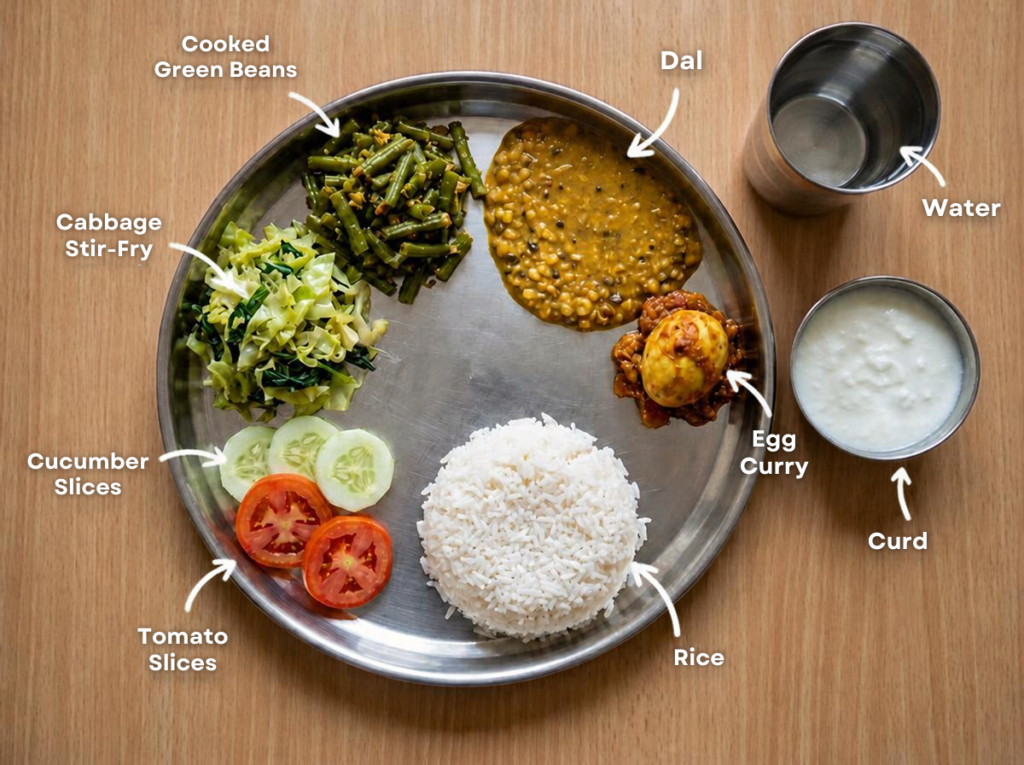
A simple place to start is the plate method: roughly half the plate with non-starchy vegetables, one quarter with a protein-rich food and one quarter with a carbohydrate-containing staple. The ADA describes the plate method as a practical meal-planning approach, while also emphasizing that meal plans must be individualized.
- Vegetables: gourds, beans, brinjal, okra, cabbage, cauliflower, greens, cucumber, tomato and other non-starchy vegetables.
- Protein-rich foods: eggs, fish, chicken, paneer, tofu, curd, pulses and legumes according to the person’s needs.
- Carbohydrate/staple: rice, roti, millet, idli, dosa, upma or another familiar staple in an appropriate portion.
This is not a prescription that every person must follow in exactly the same proportion. Insulin use, other glucose-lowering medicines, kidney health, pregnancy, body-weight goals, physical activity and glucose patterns can all change what is appropriate.
1. Start With the Whole Meal — Not With One “Bad” Food
When people are newly diagnosed, rice often gets blamed first. But carbohydrates are present in many foods across the day. Rice, idli, dosa, upma, pongal, poha, ragi preparations, millets, potatoes, fruits, milk, curd, legumes, biscuits, sweets and sweetened drinks can all contribute carbohydrate to different degrees.
So “I eat only a little rice” does not automatically mean the overall diet is low in carbohydrate or well balanced. The more useful exercise is to look at the complete day: breakfast, beverages, snacks, lunch, fruit, evening tea or coffee and dinner.
2. Can People With Diabetes Eat Rice?
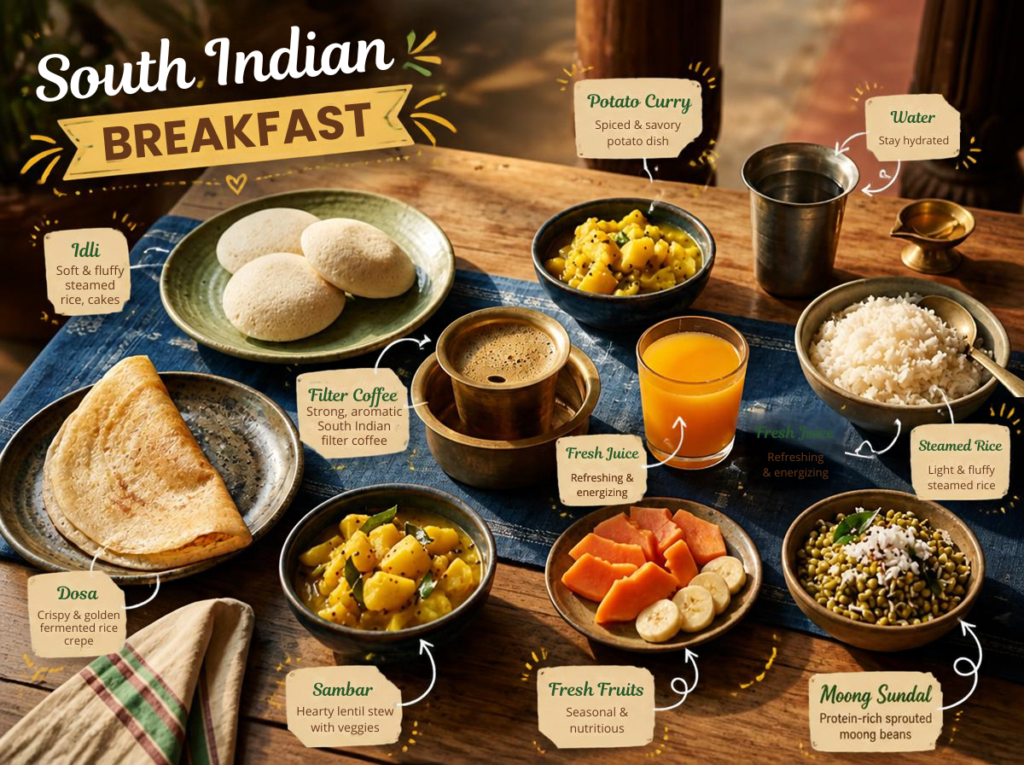
For many people with diabetes, rice can remain part of the diet. The better question is not “Is rice allowed?” but “What portion works for me, and what am I eating with it?”
A large mound of rice with very little vegetable or protein is different from a meal built with an appropriate rice portion, generous vegetables, dal or sambar and a suitable protein source. The second meal gives you more nutritional balance without pretending that rice itself has become a medicine.
White rice does not need to be labelled poison, and brown rice does not deserve an unlimited-food halo. Brown rice generally retains more of the grain’s outer layers and can contribute more fibre, but portion size and the complete meal still matter.
Rice vs Roti vs Millet: Which Is Best?
There is no universal winner. The best choice depends on quantity, preparation, the rest of the meal, personal preference and glucose response. Millets can add variety and nutrients, but replacing a large rice portion with an equally large millet portion does not automatically make the meal diabetes-friendly.
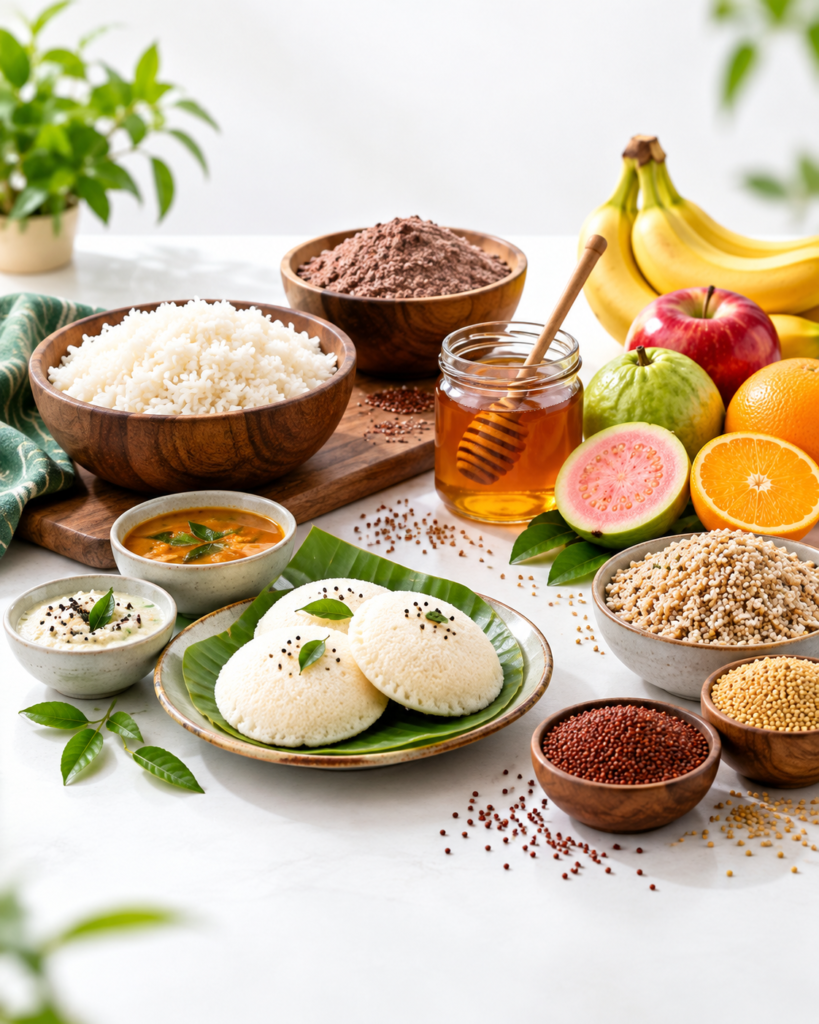
3. Is Idli Good for Diabetes?
Idli is steamed, but “steamed” does not mean “unlimited.” A plate of several idlis with a token spoon of chutney is nutritionally different from an appropriate idli portion served with generous vegetable-and-dal-based sambar and a suitable protein addition.
The same caution applies to ragi idli, oats idli or other health-labelled versions. Changing the ingredient can be useful, but the portion and the complete meal still matter.
4. Can People With Diabetes Eat Dosa?
Dosa can also fit into an individualized meal plan. What changes the meal is the size of the dosa, the batter, the amount of oil, the filling and the accompaniments. A large restaurant masala dosa with generous oil is not nutritionally identical to a sensible home portion with sambar, vegetables and protein.
Pesarattu and adai are useful South Indian options because they incorporate legumes, but they should still be treated as foods — not as cures for diabetes.
5. Upma, Pongal and Poha: How to Make Them More Balanced
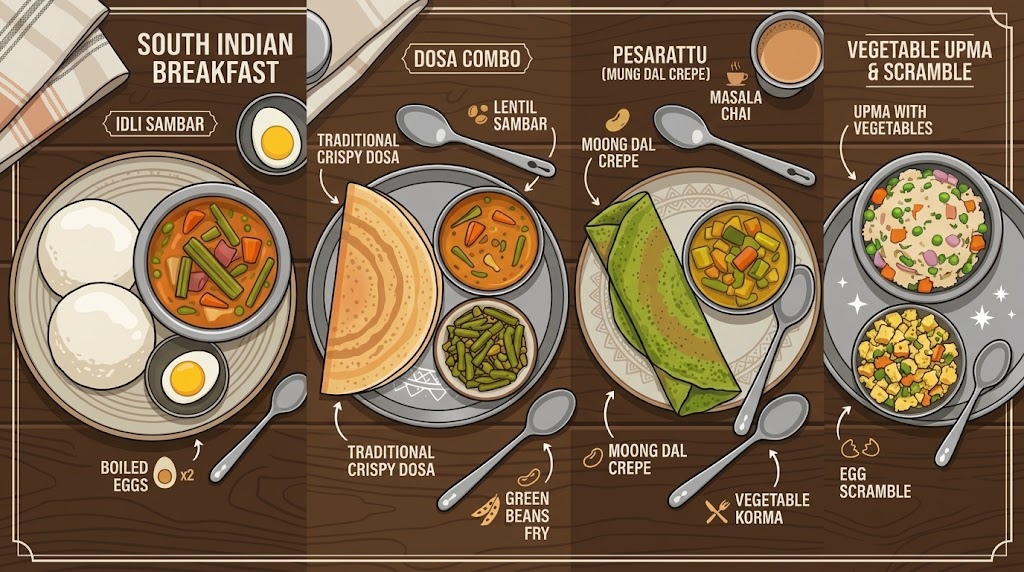
Instead of asking whether upma or pongal is “good” or “bad,” look at what dominates the bowl. A large serving of mostly cereal with very little vegetable or protein can be improved. Add vegetables, choose a sensible portion and include a suitable protein-rich accompaniment.
The same idea works for poha/atukulu and millet-based preparations. A health claim on an ingredient does not replace meal balance.
6. Sambar, Rasam and Chutney — Where Do They Fit?
Sambar can contribute pulses and vegetables and can be a valuable part of a South Indian meal. But one small ladle should not automatically be counted as the entire protein strategy for the meal. Rasam can add flavour and variety but is usually not a major protein source. Coconut or peanut chutney can fit too; homemade does not mean unlimited, so portion still matters.
7. Best South Indian Breakfast Frameworks for Diabetes
| Breakfast | Build It Better |
| Idli | Appropriate portion + generous vegetable sambar + suitable protein |
| Dosa | Sensible portion + sambar + vegetables/protein |
| Pesarattu | Pair with vegetables and a suitable side |
| Adai | Pair with vegetables; curd if appropriate |
| Vegetable upma | Increase vegetables + add protein |
| Egg dosa | Keep dosa portion sensible + add vegetables |
| Ragi/millet breakfast | Use for variety; still consider portion and meal balance |
There is no single “best diabetic breakfast.” The best breakfast is one that fits your medication plan, glucose pattern, appetite, activity, nutritional requirements and routine.
8. How to Build a South Indian Lunch
Think beyond “How many spoons of rice?” Build the plate as a combination: an appropriate staple + plenty of vegetables + dal/sambar + a suitable protein source + curd where appropriate.
Vegetarian protein choices can include dal, green gram, chana, rajma, paneer, tofu, soya and curd. Non-vegetarian choices can include eggs, fish or chicken. Remember that pulses and legumes provide protein but also contribute carbohydrate, so portions still belong in the complete meal plan.
9. Evening Snacks: The Habit That Is Easy to Miss
For many people, the challenge is not lunch. It is what happens between 4 PM and dinner: tea or coffee, biscuits, bakery snacks, mixture, chips, another beverage and “just a little” something while cooking.
Depending on individual needs, practical options may include roasted chana, sundal, boiled egg, curd, a sensible portion of nuts, whole fruit or a sprout-based snack. You do not need a special packet labelled “diabetic.”
10. Can People With Diabetes Drink Filter Coffee?
Filter coffee itself is only part of the habit. Ask what is being added and what comes with it: sugar, milk quantity, number of cups and biscuits or snacks. A useful diabetes plan looks at the routine around the coffee, not just the word “coffee.”
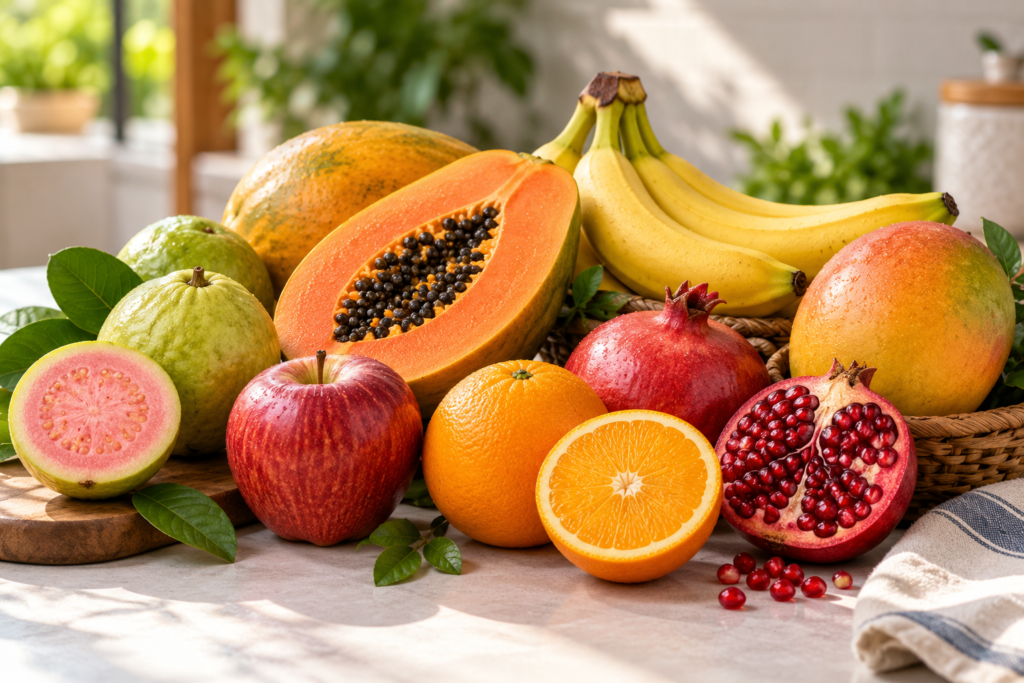
11. Fruits and Diabetes: Do You Need to Stop Banana or Mango?
Whole fruit can be part of an individualized diabetes eating pattern. Current ADA guidance includes whole fruits among foods to emphasize. ICMR-NIN’s Dietary Guidelines for Indians also prefer fresh fruit over fruit juice in its general healthy plate guidance.
That means the conversation should move away from “diabetic fruit” versus “dangerous fruit.” Guava, papaya, orange, apple, pear, pomegranate, banana, mango and grapes can all be discussed in the context of portion, frequency, the rest of the diet and individual glucose management. Whole fruit and fruit juice are not nutritionally interchangeable.
12. Are Millets Better Than Rice for Diabetes?
Ragi, jowar, bajra, foxtail millet, little millet and other millets can add variety to an Indian diet. But “millet” is not a free pass. A very large millet portion is still a large portion. Use millets because they suit your diet, taste and nutrition plan — not because social media has turned them into a cure.
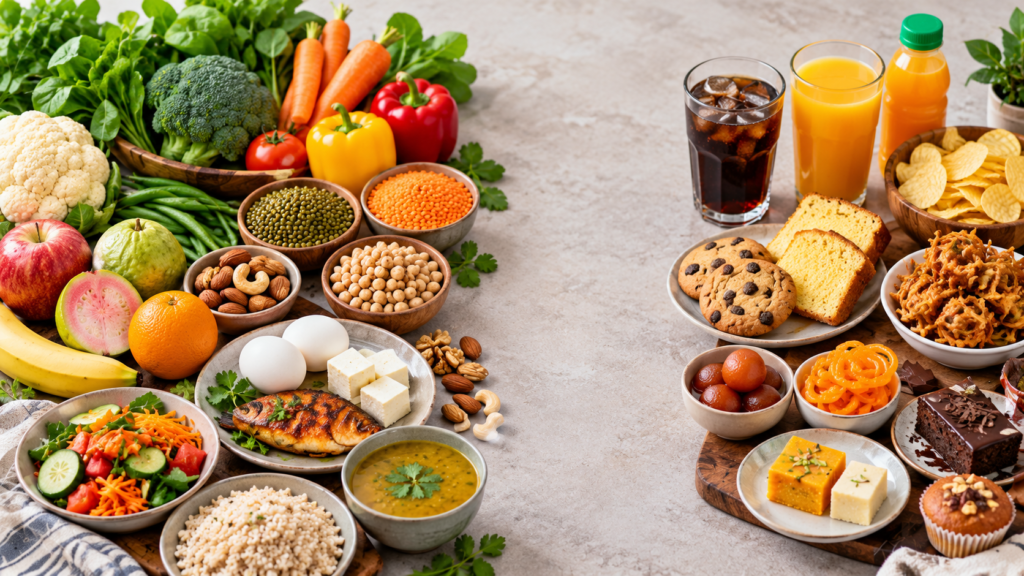
13. Foods to Choose More Often — and Foods to Limit
The strongest pattern is not built around a miracle ingredient. It is built around food quality and consistency. ADA guidance emphasizes non-starchy vegetables, whole fruits, legumes, lean proteins, whole grains, nuts and seeds while minimizing sugar-sweetened beverages, sweets, refined grains and processed or ultra-processed foods.
| Choose More Often | Limit Frequent Intake |
| Non-starchy vegetables | Sugar-sweetened beverages |
| Legumes and pulses | Fruit juice and sweet drinks |
| Whole fruits | Sweets and bakery foods |
| Appropriate whole grains | Highly refined snacks |
| Lean protein sources | Frequent deep-fried foods |
| Nuts and seeds in suitable portions | Large refined-grain portions |
| Minimally processed foods | Ultra-processed foods |
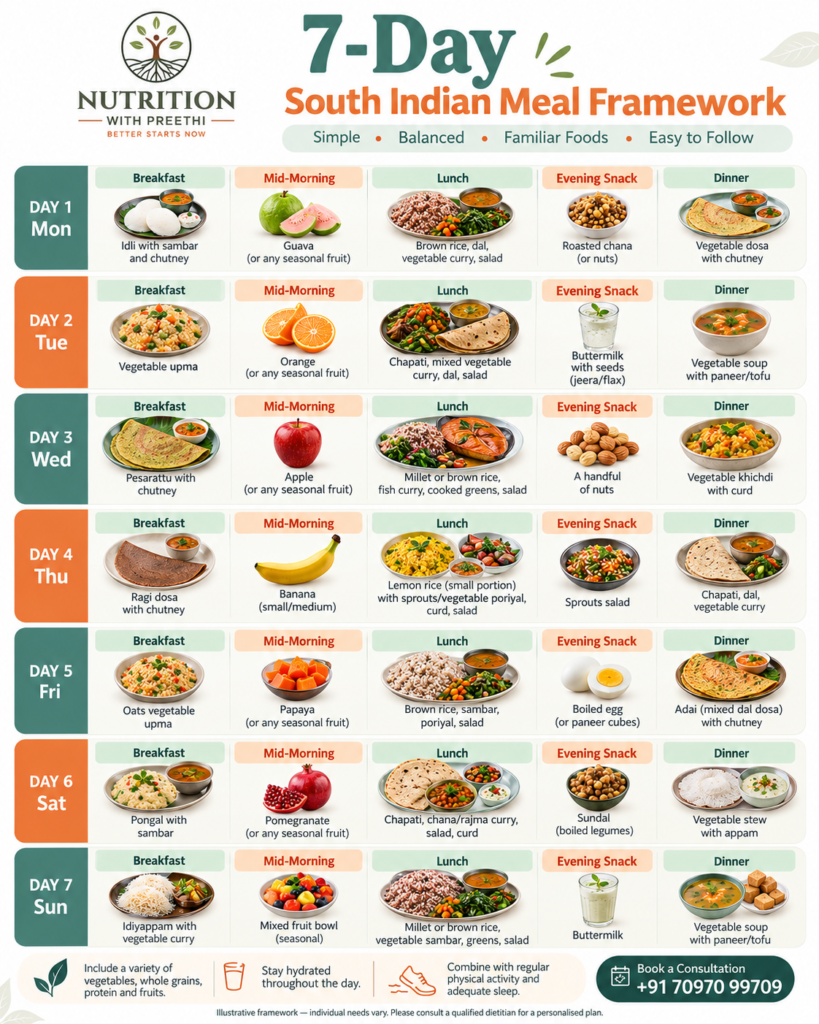
14. 7-Day South Indian Diabetic Meal Chart
Use this as an illustrative framework — not as a prescription. Exact quantities and timings must be individualized, especially for people using insulin or medicines that can cause hypoglycaemia, and for people with kidney disease, pregnancy or other medical conditions.
| Day | Breakfast | Mid-morning | Lunch | Evening | Dinner |
| Monday | Idli + sambar + protein | Whole fruit | Rice + vegetables + dal + protein | Sundal | Dosa + vegetables + protein |
| Tuesday | Pesarattu + vegetables | Whole fruit | Rice + sambar + vegetables + curd/protein | Curd or suitable nuts | Roti + vegetables + protein |
| Wednesday | Vegetable upma + protein | Whole fruit | Rice + dal + 2 vegetables + protein | Roasted chana | Adai + vegetables |
| Thursday | Dosa + sambar + protein | Whole fruit | Rice + vegetable curry + protein | Sundal | Vegetables + protein + appropriate staple |
| Friday | Idli + sambar + protein | Whole fruit | Rice + rasam/sambar + vegetables + protein | Curd | Pesarattu + vegetables |
| Saturday | Adai + vegetables | Whole fruit | Rice + vegetables + dal + protein | Planned snack | Dosa + protein + vegetables |
| Sunday | Balanced South Indian breakfast | Whole fruit | Family meal using plate method | Suitable snack | Lighter balanced South Indian dinner |
15. Vegetarian South Indian Diabetes Diet
A vegetarian South Indian diet can be balanced, but protein deserves deliberate attention. Dal, green gram, chana, rajma, paneer, tofu, soya, curd, nuts and seeds can all contribute. The practical goal is to distribute suitable protein-rich foods through the day instead of depending on one small serving at dinner.
16. Non-Vegetarian South Indian Diabetes Diet
Eggs, fish and chicken can fit according to preference, medical needs and overall diet. Cooking style matters. Grilled, steamed, boiled or lightly cooked preparations can be used more often than frequently deep-fried options.
17. Diabetes + Weight Loss: Do Not Simply Eat Less
If weight loss is also a goal, do not turn diabetes management into a contest to see how little you can eat. Look at portions, protein, vegetables, cooking oil, drinks, snacks, activity, sleep and consistency. Diabetes nutrition and weight-loss nutrition overlap, but they are not identical for every person.
18. Diabetes + Kidney Disease: A Different Conversation
If you have diabetes and chronic kidney disease, do not copy a high-protein diabetes plan from the internet. Protein, sodium, potassium, fluids and other nutrients may need individual adjustment. ADA guidance specifically recommends individualized medical nutrition therapy when diabetes coexists with chronic kidney disease and other conditions.
19. Medicines, Insulin and Meal Timing
Your medication plan matters. People using insulin or medicines that can cause low blood glucose should not suddenly skip meals or dramatically change carbohydrate intake without discussing the change with their treating team. Meal timing and carbohydrate distribution may need to be coordinated with treatment.
20. Ten South Indian Diabetes Food Myths
Myth 1: Diabetes means no rice. Not necessarily. Portion and the complete meal matter.
Myth 2: Ragi is unlimited. No. It is still a carbohydrate-containing food.
Myth 3: Honey is safe because it is natural. Natural does not mean glucose-neutral.
Myth 4: Brown sugar is a diabetes-friendly substitute. Changing the colour of sugar does not make it a free food.
Myth 5: People with diabetes cannot eat fruit. Whole fruit can often be included appropriately.
Myth 6: Idli is unlimited because it is steamed. Steaming does not remove carbohydrate.
Myth 7: Millets automatically lower blood sugar. They can be nutritious, but they are not medicines.
Myth 8: Skipping meals is always better. Meal timing must consider medication, glucose and the individual.
Myth 9: Sugar-free means unlimited. A sugar-free label does not mean calorie-free or carbohydrate-free.
Myth 10: One bitter food can cure diabetes. No single food should be promoted as a cure for diabetes.
Frequently Asked Questions
What is the best South Indian diet for diabetes?
There is no single best diet for everyone. A practical pattern emphasizes vegetables, suitable protein, appropriate carbohydrate portions, legumes, whole fruits and minimally processed foods while being adapted to medications, glucose goals and lifestyle.
Can people with diabetes eat rice every day?
For some people, rice can fit regularly. The appropriate portion depends on the total meal, glucose pattern, medication, activity and individual nutrition needs.
How much rice can a person with diabetes eat?
There is no safe universal number that applies to everyone. Portion should be individualized rather than copied from a generic chart.
Is idli good for diabetes?
Idli can fit, but portion and accompaniments matter. Pairing an appropriate portion with vegetable-rich sambar and suitable protein can make the meal more balanced.
Is dosa good for diabetes?
Dosa can fit into an individualized plan. Size, batter, oil, filling and accompaniments all affect the complete meal.
Is ragi good for diabetes?
Ragi can provide variety and nutrients, but it still contributes carbohydrate. “Healthy” does not mean unlimited.
Can people with diabetes eat banana?
Banana is not automatically prohibited. Portion, frequency and individual glucose management matter.
Can people with diabetes eat mango?
Mango does not automatically need to be eliminated. Treat it as a whole fruit and individualize the portion.
Can people with diabetes drink filter coffee?
Often yes, but look at added sugar, milk, frequency and snacks eaten with it.
What should a person with diabetes eat at night?
A balanced dinner can include vegetables, suitable protein and an appropriate carbohydrate portion. The exact meal depends on treatment, glucose patterns and individual needs.
Is brown rice compulsory for diabetes?
No. Brown rice can offer more fibre than white rice, but it is not compulsory and is not unlimited.
Are millets better than rice for diabetes?
Not automatically. Both portion and meal composition matter; choose the staple that fits your overall nutrition plan and preferences.
Final Takeaway
A South Indian diabetic diet plan does not have to erase South Indian food. Rice, idli, dosa, sambar, curd, fruit and millets may all have a place in an individualized eating plan. The useful questions are: How much am I eating? What am I pairing it with? What does the rest of my day look like? And how does my body respond?
Build meals around more vegetables, suitable protein, appropriate carbohydrate portions, better food quality and consistency. Then personalize the details around your glucose pattern, medicines, activity, weight goals and medical conditions.
Consult Nutrition With Preethi :
If you are confused about rice, breakfast, fruit, snacks or portion sizes after a diabetes diagnosis, personalised nutrition guidance can help turn general advice into a plan that fits your everyday South Indian meals.
Nutrition With Preethi
Preethi Gurajala, Clinical Dietitian
MSc — Nutrition, Biochemistry & Microbiology
Phone / WhatsApp: +91 70970 99709
Email: nutrition.preethi@gmail.com
Website: nutritionwithpreethi.com
Medical disclaimer: This article is for general education and is not a personalised diabetes prescription. People using insulin or glucose-lowering medicines, and people with kidney disease, pregnancy or other medical conditions, may require individualized guidance from their treating clinician and qualified dietitian.
Evidence Base & Editorial Notes
This article was expanded using current public guidance and the existing Nutrition With Preethi strategy. The strategy document positions Preethi around everyday South Indian and Indian foods, diabetes/metabolic nutrition, practical food decisions and a tone that is attention-worthy but clinically nuanced. It also specifically identifies South Indian breakfasts, rice vs roti, idli vs dosa and diabetes meal situations as core content territory.
Key evidence used for clinical framing:
- American Diabetes Association. Standards of Care in Diabetes—2026, Section 5: Facilitating Positive Health Behaviors and Well-being to Improve Health Outcomes. Key points used: individualized medical nutrition therapy; no one-size-fits-all eating pattern; meal plans based on nutrient quality, calories, metabolic goals, cultural background and food preferences; emphasis on non-starchy vegetables, whole fruits, legumes, lean proteins, whole grains, nuts and seeds; plate method as a meal-planning approach.
- ICMR–National Institute of Nutrition. Dietary Guidelines for Indians 2024. Key points used: balanced food-group approach, vegetables, pulses, cereals/millets, nuts/seeds, preference for fresh fruit over juice, and limiting highly refined/processed foods and high-sugar intake.
- Research Society for the Study of Diabetes in India (RSSDI). Clinical Practice Recommendations for the Management of Type 2 Diabetes Mellitus (2022) and current guideline/position-statement repository. Used as Indian diabetes-practice context; this article does not claim that a single fixed South Indian meal chart is an RSSDI prescription.
Editorial safeguard: the 7-day meal chart is intentionally qualitative rather than prescribing fixed grams, calories or carbohydrate exchanges. Those values should be personalized after assessment, particularly when medication, insulin, kidney disease, pregnancy or other clinical factors are present.