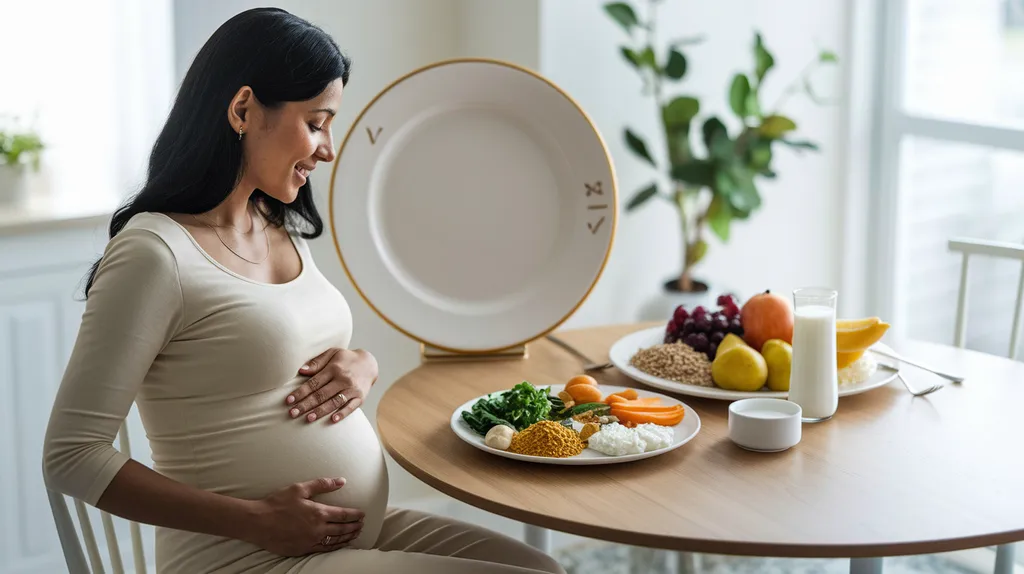
“Eating for two” is one of the most repeated phrases in pregnancy — and one of the most misunderstood. Clinical dietitian Preethi Gurajala explains that the phrase was never meant to double your plate. It refers to nourishing two lives with the right nutrients, not double the quantity of food. In pregnancy and after delivery, what you eat matters far more than how much. This guide breaks down what “eating for two” truly means, how much extra your body actually needs, which nutrients are essential, and how to build a simple, balanced Indian plate.
“Double food kaadu… better-planned nutrition kaavaali.” (Not double the food — well-planned nutrition is what you need.)
Key Takeaways
- “Eating for two” refers to nutrition quality, not eating two full plates.
- Most women need no extra calories in the first trimester and only about 300–350 extra calories a day in the second and third trimesters — roughly a bowl of dal with rice, or a glass of milk with a handful of nuts.
- Food quality — protein, iron, folate, calcium and other micronutrients — matters as much as quantity.
- Eating far more than needed can cause discomfort and excess weight gain, and does not make the baby healthier.
- After delivery, a breastfeeding mother needs more energy than during pregnancy — but still through balanced meals, not overeating.
- Every pregnancy is different; needs change by trimester and with medical conditions, so individual guidance matters.
When to Seek Medical Care
Nutrition advice does not replace obstetric care. Contact your obstetrician promptly if you have persistent vomiting and cannot keep food or fluids down, sudden or severe swelling of the face and hands, a severe headache with blurred vision, reduced baby movements, vaginal bleeding, or signs of high blood sugar or high blood pressure. These can point to conditions that need medical attention beyond diet.
What Does “Eating for Two” Really Mean?
The phrase is a reminder that your body is now supporting the growth of your baby, so its nutrient needs rise. But “for two” does not mean two adult-sized portions. A developing baby needs concentrated nutrition — protein to build tissue, iron and folate for blood and the nervous system, calcium for bones — far more than it needs extra bulk. The practical goal is a nutrient-dense plate, not a bigger one.
How Many Extra Calories Do You Actually Need in Pregnancy?
Energy needs rise only modestly. In the first trimester, most women need no meaningful increase at all. In the second and third trimesters, the requirement rises by roughly 300–350 calories a day — the size of one balanced snack or a small extra serving at a meal, not a second full plate. Individual needs vary with pre-pregnancy weight, activity level and any medical conditions, so treat these figures as a general guide rather than a fixed target.
Why Does Food Quality Matter More Than Quantity?
Extra calories from fried snacks, sweets and refined foods add weight without supplying what the baby needs. The same calories from dal, eggs, curd, vegetables, greens, fruit and whole grains deliver protein, vitamins and minerals along with energy. During pregnancy, every meal is a chance to provide building blocks for the baby’s growth — so the composition of the plate matters more than its size.
Which Nutrients Matter Most During Pregnancy?
Some nutrients become especially important:
- Folate (folic acid): Supports the baby’s brain and spinal cord in early development. In India, women are generally advised 400 micrograms of folic acid daily from the pre-conception period through the first trimester to reduce the risk of neural tube defects. Food sources include dark green leafy vegetables, legumes and citrus fruit.
- Iron: Needed to make the extra blood that supports pregnancy and to prevent anaemia, which is common among Indian women. Iron–folic acid tablets are routinely provided from the second trimester onwards under national programmes. Food sources include greens, legumes, jaggery and — for non-vegetarians — meat and eggs; pairing plant iron with vitamin C–rich foods improves absorption.
- Protein: The main building block for the baby’s tissues. Pregnancy raises protein needs — Indian guidelines suggest roughly 22–26 grams extra per day. Sources include dal, milk, curd, paneer, eggs, and fish or chicken.
- Calcium and vitamin D: Support the baby’s bones and teeth and protect the mother’s bone health. Milk, curd, paneer, ragi and green leafy vegetables help; calcium supplementation is now recommended during pregnancy under Indian guidelines to lower the risk of certain blood-pressure complications.
- Iodine: Important for the baby’s brain development; using iodised salt helps meet daily needs.
- Omega-3 (DHA): Supports the baby’s brain and eyes; found in fish, and in flaxseed and walnuts for vegetarians.
- Fibre and fluids: Help prevent constipation, which is common in pregnancy. Whole grains, fruit, vegetables and enough water make a real difference.
Supplements are prescribed by your doctor and are meant to complement — not replace — a balanced diet.
What Does a Balanced Pregnancy Plate Look Like?
A simple, familiar structure works well:
- Half the plate: vegetables and greens.
- One quarter: protein — dal, egg, curd, paneer, fish or chicken.
- One quarter: whole grains — rice, millets or roti.
- Through the day: a serving of fruit and a source of dairy.
- Meal timing: small, frequent meals often sit better than large ones, especially when nausea or heartburn is present.
How Does Nutrition Change Across the Three Trimesters?
- First trimester: Focus on folate and managing nausea. Small, frequent, bland meals often help. Extra calories are usually not needed.
- Second trimester: Appetite typically improves and the baby grows quickly. Add a modest amount of extra nutrient-dense food, and prioritise iron, calcium and protein.
- Third trimester: The baby gains most of its weight. Continue balanced meals; smaller, more frequent meals can ease heartburn and fullness as space becomes limited.
Which Foods Should You Limit or Avoid in Pregnancy?
Some foods carry a higher risk during pregnancy:
- Raw or undercooked eggs, meat and fish.
- Unpasteurised milk and soft cheeses.
- Excess caffeine — keep tea and coffee moderate.
- Alcohol, which is best avoided completely.
- Excess sugar, deep-fried foods and highly processed snacks, which add calories without nutrition.
- Very high-mercury fish.
Your obstetrician or dietitian can tailor this list to your situation.
What About “Eating for Two” After Delivery?
Nutrition stays important in the postnatal period, especially while breastfeeding. A breastfeeding mother’s energy needs are actually higher than during pregnancy — Indian and international guidance suggests roughly 450–600 extra calories a day in the first six months — because producing milk takes energy. Even so, this is met through additional balanced meals and fluids, not by overeating. Continued iron, calcium and protein support recovery and milk supply, and adequate hydration and rest matter as much as food.
Does Eating Extra Make the Baby Healthier or Bigger?
No. Beyond the modest increase your body needs, extra food is stored as maternal fat rather than benefiting the baby. Consistently overeating can lead to excess weight gain, discomfort, and a higher chance of complications such as gestational diabetes. A healthy baby comes from balanced nutrition and good antenatal care — not from larger portions.
How Much Weight Gain Is Healthy in Pregnancy?
Healthy weight gain depends on your weight before pregnancy. Women who start at a lower weight are generally advised to gain more, and those who start heavier to gain less. Because healthy ranges differ for each person — and body-mass-index cut-offs for Indian women differ from Western charts — your obstetrician will set an appropriate target and monitor it at antenatal visits. Steady, gradual gain is the aim rather than a single fixed number.
Which Nutrition Approach May Suit Common Situations?
- Morning sickness (nausea and vomiting): Small, frequent, bland meals; dry foods on waking; sipping fluids through the day. Persistent vomiting needs medical review.
- Gestational diabetes: A dietitian-guided plan focused on portion control, complex carbohydrates and balanced meals, alongside medical management.
- Vegetarian diet: Very achievable with dal, milk, curd, paneer, soya, nuts and seeds; pairing iron-rich plant foods with vitamin C improves absorption, and vitamin B12 needs attention.
- Anaemia: Iron-rich foods with vitamin C, plus prescribed iron supplementation.
- Breastfeeding: Extra balanced meals, continued iron and calcium, and plenty of fluids to support milk supply.
Individual advice from a dietitian and obstetrician is more reliable than general rules.
Myth vs Fact
Myth: Eating for two means two full plates.
Fact: It means better nutrition, not double the quantity — only a modest calorie increase is needed later in pregnancy.
Myth: The more you eat, the healthier the baby.
Fact: Beyond the small increase your body needs, extra food adds maternal weight, not baby health.
Myth: You should give in to every craving.
Fact: Occasional cravings are fine, but the daily foundation should be balanced and nutrient-dense.
Myth: Breastfeeding mothers must eat huge quantities.
Fact: Milk supply depends on balanced nutrition, fluids and rest — not on very large portions.
Myth: Supplements can replace a healthy diet.
Fact: Supplements fill specific gaps; they work alongside food, not instead of it.
Conclusion
“Eating for two” is about quality, not quantity. Your body needs only a modest increase in energy during pregnancy and a little more while breastfeeding — but a meaningful increase in nutrients like protein, iron, folate and calcium. A balanced Indian plate of dal, eggs or curd, vegetables, greens, fruit and whole grains, backed by regular antenatal care, does far more for you and your baby than a second helping ever could. Because every pregnancy is different, personalised guidance from your dietitian and obstetrician is the safest path.
Frequently Asked Questions
Do I really need to eat double during pregnancy?
No. In the first trimester most women need no extra calories, and in the later trimesters only about 300–350 extra calories a day. The focus should be on nutrient-rich food, not larger portions.
Which is the single most important nutrient in early pregnancy?
Folate (folic acid) is especially important early on for the baby’s brain and spine, which is why it is advised from the pre-conception period through the first trimester. Iron, protein and calcium become increasingly important as pregnancy progresses.
I am vegetarian — can I meet my pregnancy nutrition needs?
Yes. Dal, milk, curd, paneer, soya, nuts, seeds and green leafy vegetables can cover protein, iron and calcium. Pairing iron-rich foods with vitamin C helps absorption, and vitamin B12 should be discussed with your doctor.
Should I eat more while breastfeeding than during pregnancy?
Breastfeeding actually needs slightly more energy — roughly 450–600 extra calories a day in the first six months — met through balanced meals and fluids rather than overeating.
Will eating more help my baby grow bigger and healthier?
No. Beyond the modest increase your body needs, extra food is stored as maternal fat and can raise the risk of complications. Balanced nutrition and antenatal care support a healthy baby.
Consult Clinical Dietitian Preethi Gurajala
Nutrition with Preethi offers personalised pregnancy and postnatal nutrition guidance for South Indian families — including trimester-wise plans, vegetarian and non-vegetarian options, and support for conditions such as gestational diabetes and anaemia.
Phone / WhatsApp: +91 70970 99709
Email: nutrition.preethi@gmail.com
Website: nutritionwithpreethi.com
References
ICMR–NIN — Nutrient Requirements for Indians (Recommended Dietary Allowances & Estimated Average Requirements), 2020.
ICMR–NIN — Dietary Guidelines for Indians, 2024 (including the 1,000-day nutrition approach and antenatal calcium supplementation).
Ministry of Health & Family Welfare, Government of India — Anemia Mukt Bharat, Operational Guidelines (Iron–Folic Acid supplementation).
Ministry of Health & Family Welfare, Government of India — National Guidelines for Calcium Supplementation During Pregnancy and Lactation.
World Health Organization — Recommendations on antenatal care and maternal nutrition.
Federation of Obstetric and Gynaecological Societies of India (FOGSI) — maternal nutrition resources.
Written & Reviewed By: Preethi Gurajala, Clinical Dietitian
Qualifications: MSc — Nutrition, Biochemistry & Microbiology
This article is for general information and does not replace personalised medical or nutritional advice. Please consult your obstetrician and dietitian for guidance specific to your pregnancy.